Revista Veterinaria. 2026; 37(1)
https://doi.org/10.30972/vet.3719104
Artículo Original


J.F Micheloud1,2,3
R García Prieto4
M Signorini5
1Instituto Nacional de Tecnología Agropecuaria (INTA), Centro de Investigaciones Agropecuarias (CIAP), Instituto de Investigación Animal del Chaco Semiárido (IIACS), Área de Salud Animal "Dr. Bernardo J. Carrillo", Ruta Nacional 68 Km 172 (A4403), Cerrillos, Salta, Argentina.
2Consejo Nacional de Investigaciones Científicas y Técnicas (CONICET), Rivadavia 941 (A4400), Salta, Argentina.
3Universidad Católica de Salta, Facultad de Ciencias Agrarias y Veterinarias, Campo Castañares S/N, Salta, Argentina.
5Instituto de Investigación de la Cadena Láctea (INTA-CONICET), Ruta 34 Km 227, Rafaela (2300), Santa Fe, Argentina.
 micheloud.juan@inta.gob.ar
Recibido: 09 septiembre 2025 / Aceptado: 07 enero 2026
Abstract
The intensification of cattle finishing systems in Argentina has increased productivity but has also introduced new health challenges. This study analyzed mortality and treatment patterns in a commercial feedlot in northwestern Argentina during 2022. A total of 426 necropsies were performed, corresponding to an annual mortality rate of 1.67%, and 2,463 therapeutic treatments were recorded. The main causes of death were non adaptation syndrome (17.8%), respiratory diseases (16.4%), anemia-inducing diseases such as anaplasmosis and babesiosis (11.7%), digestive disorders (10.7%), traumatic injuries (8.9%), localized inflammatory processes (8.9%), neurological disorders (8.9%), genitourinary disorders (4.9%), and heat stress (4.9%). Mortality was significantly associated with season (p<0.001), with higher rates observed during winter and summer. Most deaths (80%) occurred in purchased cattle weighing less than 180 kg at entry; these animals were seven times more likely to die than farm-born cattle. Respiratory disease was the leading cause of treatment (1.51%), followed by babesiosis (0.43%) and digestive disorders (0.46%), both showing marked seasonal patterns. Necropsy findings frequently included fibrinous or suppurative pneumonia, acute rumenitis, bloat, peritonitis, pericarditis, and polioencephalomalacia. These results highlight the multifactorial nature of mortality in feedlot cattle and emphasize the need for preventive strategies adapted to local conditions, focusing on stress reduction, nutritional management, and improved biosecurity to mitigate respiratory and hemolytic diseases.
Key words: Beef cattle, animal health, intensive systems, epidemiology.
Resumen. La intensificación de los sistemas de engorde a corral en Argentina ha incrementado la productividad, pero también ha introducido desafíos sanitarios. Este estudio analizó las tasas de mortalidad y tratamientos en un feedlot comercial del noroeste argentino durante 2022. Se realizaron un total de 426 necropsias, que representaron una tasa anual de mortalidad del 1,67%, y se registraron 2.463 tratamientos. Las principales causas de muerte fueron el síndrome de mala adaptación al feedlot (17,8%), las enfermedades respiratorias (16,4%), las enfermedades que inducen anemia (como anaplasmosis y babesiosis, 11,7%), los trastornos digestivos (10,7%), las lesiones traumáticas (8,9%), los procesos inflamatorios localizados (8,9%), los trastornos neurológicos (8,9%), las enfermedades genitourinarias (4,9%) y el estrés térmico (4,9%). La mortalidad se asoció significativamente con la estación del año (p<0,001), observándose tasas más elevadas en invierno y verano. La mayoría de las muertes (80%) ocurrió en animales comprados con un peso de ingreso inferior a 180 kg; estos tuvieron siete veces más probabilidad de morir que los animales nacidos en el establecimiento. La enfermedad respiratoria fue la principal causa de tratamiento (1,51%), seguida de babesiosis (0,43%) y los trastornos digestivos (0,46%), ambos con picos estacionales. Los hallazgos de necropsia incluyeron con frecuencia neumonías fibrinosas o supurativas, rumenitis aguda, timpanismo, peritonitis, pericarditis y polioencefalomalacia. Estos resultados destacan la naturaleza multifactorial de la mortalidad en bovinos en feedlot y la necesidad de estrategias preventivas adaptadas a las condiciones locales. Dichas estrategias deben enfocarse en reducir el estrés, adecuar la nutrición y mejorar la bioseguridad para mitigar enfermedades respiratorias y hemolíticas.
Palabras clave: Bovinos de carne, sanidad animal, sistemas intensivos, epidemiología.The expansion of feedlot finishing in Argentina during the 1990s was driven by the intensification of agriculture and the expansion of crops such as soybeans and corn. These developments displaced large areas of pastureland and altered traditional backgrounding and pasture-based finishing schemes (Arelovich et al. 2011). This intensive model enabled more efficient use of space, shorter production cycles, and greater capital efficiency. However, it also introduced new health challenges impacting morbidity, mortality, and ultimately, the profitability of the production system (Miranda et al. 2013).
Studies on the causes of mortality in feedlot systems in Argentina and neighboring countries show that deaths can be grouped into three categories: respiratory diseases, digestive disorders (metabolic and infectious), and accidents or other causes (Costa et al. 2003, Laguzzi et al. 2015). However, specific causes of death may vary among feedlots and are influenced by environmental conditions and management factors unique to each establishment (Laguzzi et al. 2015).
In northwestern Argentina, extreme summer climatic conditions (high temperatures and humidity), along with variations in management practices and the cattle's previous health status, can alter the frequency and distribution of these causes (Miranda et al. 2013, Sueldo 2020). Therefore, investigating mortality in these systems under such circumstances allows for the identification of health priorities and the design of scientifically based control strategies adapted to the local environment (Miranda et al. 2013).
Within this framework, the objective of this study was analyzed the main causes of mortality and treatment rates in a feedlot located in Northwestern Argentina, providing key information to improve animal health and reduce associated losses.
Study site and population. The study was conducted in a commercial feedlot in Pozo Hondo, Santiago del Estero, which had a capacity to hold 16,000 to 18,000 heads of cattle of various origins. The majority of the cattle were purchased at auctions and generally weighed more than 180 kg, though lighter animals were occasionally received. Upon arrival, the animals were identified and enrolled in the health management program. The animals were vaccinated against respiratory diseases (Biopoligen® AIR or Biopoligen® HS), clostridial diseases (Policlostrigen®), and rabies (Bagovac® Rabia or Biorabia®, depending on availability). They also received antiparasitic treatment with levamisole (Ripercol® L, Biogénesis Bagó) to control gastrointestinal nematodes. When were necessary, the animals received specific treatment against ticks. The program included an initial sanitary application after a 3- to 5-day rest and adaptation period following arrival, followed by a booster dose 21 days after the first application.
Mortality assessment. Throughout 2022, a total of 426 necropsies were performed by the farm veterinarians, who received regular training aimed at improving diagnostic sensitivity and specificity. When required, the evaluation was complemented with laboratory analyses, including histopathology, bacteriology, and other tests as appropriate. Specifically, for the diagnosis of babesiosis and anaplasmosis, peripheral blood smears or central nervous system imprints were performed. All analyses were conducted at the Animal Health Research Area diagnostic laboratory (INTA, Salta). In select instances, samples were referred to national reference laboratories if specialized techniques were required. Causes of death were grouped into eight main categories: anemia conditions, digestive disorders, neurological disorders, respiratory diseases, traumatic injuries, urinary disorders, localized inflammatory conditions, non adaptation syndrome, and heat stress. Cases in which a clear diagnosis could not be established through necropsy and complementary studies were classified as undetermined.
Treatment rate assessment. All treatments administered at the facility were recorded during the same period. Field personnel carried out treatments under veterinary supervision. Throughout the year, repeated training sessions were conducted, focusing on the early detection of sick animals, as well as the establishment of diagnostic criteria and treatment algorithms. Cases were classified based on information recorded in clinical records using the following main categories: respiratory, ocular, anemia (babesiosis and anaplasmosis), digestive, locomotor, and others.
Ethical approval. This observational study was conducted under routine productive and husbandry conditions, with no experimental interventions performed, so it did not require approval by an institutional animal care and use committee.
Statistical analysis. The following variables were recorded for each death animal: weight at admission, time in the feedlot, age, sex, origin, breed, and cause of death (main category). The data was analyzed using descriptive statistics, including frequencies and proportions of causes of mortality by category.
For each of the diagnostic categories, their temporal association was evaluated, using the climatic season as an independent variable. This comparison was made using a Generalized Linear Model, with binomial probability distribution (number of dead animals by type of diagnosis over the total number of animals present in the feedlot) and logarithmic link function. The statistical analysis was carried out using the InfoStat software (Di Rienzo et al. 2008).
A total of 426 deaths were recorded during the study period, representing an annual mortality rate of 1.67%. The distribution of deaths by cause is shown in Table 1. Throughout the year, 2,463 treatments were administered to address various health conditions in feedlot cattle. Treatment frequency varied significantly with season, being higher in winter (2.78%) compared with the rest of the year (<1.35%) (p<0.001). When analyzed by disease category, a significant temporal association was observed in all cases (p<0.001). During winter, treatments were more frequently administered for respiratory diseases (1.51%), bovine babesiosis (0.43%), and digestive disorders (0.46%). Conversely, treatment rates for locomotor system disorders (0.36%) and other conditions (0.096%) were higher during summer. In spring, the frequency of treatments for ocular diseases increased (0.43%).
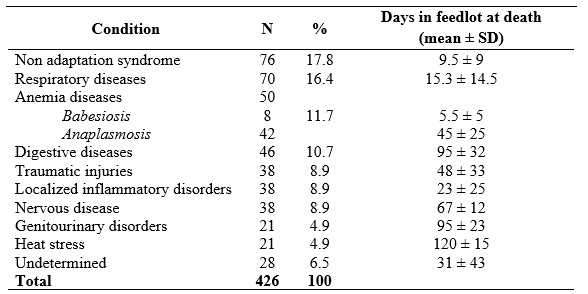
The average monthly mortality rate was 0.097% ± 0.023% (maximum = 0.13%; minimum = 0.06%). Most cases of death were attributed to non adaptation syndrome (17.8%), respiratory diseases (16.5%), gastrointestinal diseases (10.4%), and anaplasmosis (9.9%). Overall, mortality was associated with season (p<0.001). Higher mortality rates were recorded during winter and summer (both 0.33%) compared to autumn (0.25%) and spring (0.22%).
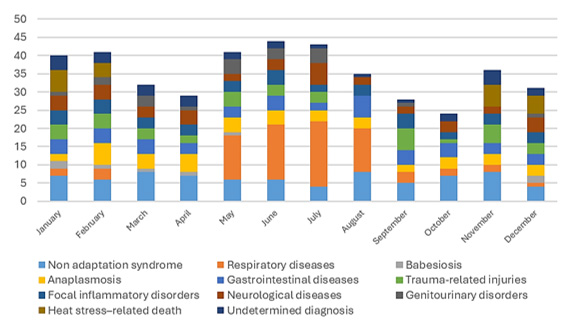
Figure 1 shows the monthly variation of each diagnosed disorder throughout the study year. Only deaths associated with respiratory diseases (p<0.001), babesiosis (p<0.001), and heat-stress-related deaths (p = 0.031) were related to season. The highest incidence of respiratory diseases occurred in winter (0.12%), followed by autumn (0.028%), while the lowest incidence occurred in spring and summer (0.017%). Deaths due to babesiosis occurred exclusively in summer (0.014%) and fall (0.007%). As expected, heat-stress-related deaths occurred only in summer (0.04%) and spring (0.02%).
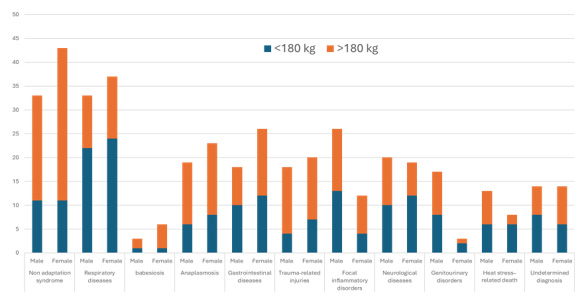
Most of the deaths (80%, n = 336) corresponded to purchased animals weighing less than 180 kg at admission, presenting a significantly higher risk than animals born in the same farm (OR = 7.2, 95% CI: 5.7-9.1, p<0.001). No significant differences in mortality were observed between females and males. The distribution of different health disorders according to the animals' sex and weight at entry is presented in Figure 2. The average time in the feedlot of the dead animals was 35.3 ± 116 days. These results are somewhat higher than those reported in previous studies conducted in Argentinean feedlots. For example, in a feedlot located in La Plata, Buenos Aires, the annual mortality was 0.69%, and the risk of death during the adaptation period (<30 days) was three times higher than in the termination phase (>30 days) (Costa et al. 2003). Similarly, in this study, almost 60% (n = 252) of the animals died before 30 days of confinement.
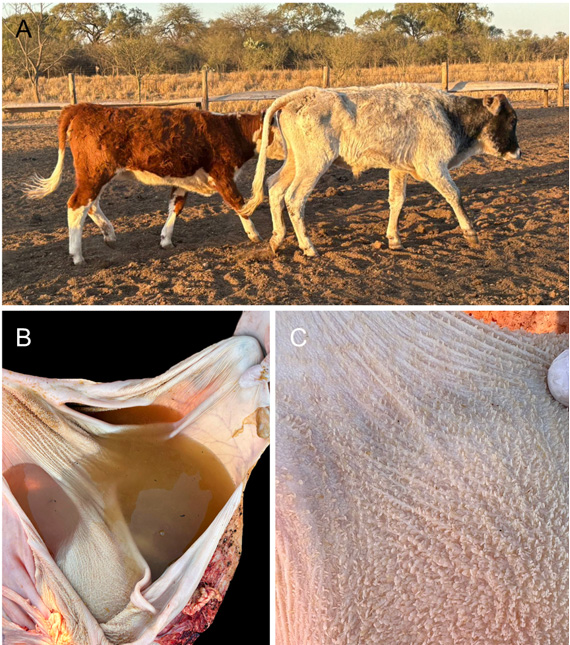
Non adaptation syndromeduring the initial entry period accounted for 17.8% of cases (n = 76), highlighting the impact of transport stress, dietary changes, and social competition on the survival of newly arrived animals. Affected cattle typically exhibit poor body condition, sunken flanks, and a lack of appetite (Figure 3.A). At necropsy, the animals exhibit an absence of body fat and minimal gastrointestinal contents. The rumen usually contains only water (Figure 3.B) and has thin walls with atrophied rumen papillae (Figure 3.C). Transportation stress and adaptation to a new environment compromise the immune response and feed intake capacity of cattle (Odeón and Romera 2017). These issues are often associated with pneumonia and other diseases due to the immunosuppression experienced by the animals upon arrival (Earley et al. 2017).
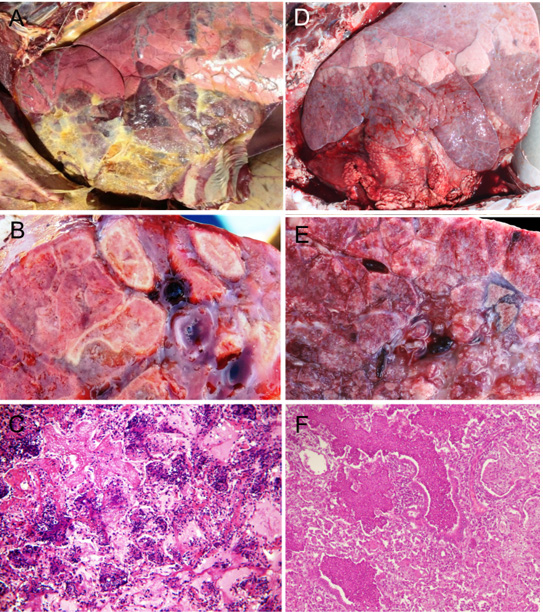
Respiratory diseases accounted for 16.4% of deaths (n = 70) in the feedlot studied, with a predominance of fibrinous or suppurative pneumonia (Figure 4). This trend coincides with the high incidence of bovine respiratory disease in intensive systems, as evidenced by both national (Costa et al. 2003, Laguzzi et al. 2015) and international (Zhang et al. 2021) research. These results underscore the need to implement more effective preventive strategies, such as pre-entry vaccinations and stress management. This study did not perform a microbiological diagnosis of the pneumonias; however, international bibliography suggests that suppurative pneumonias are usually associated with Pasteurella multocida, while fibrinous pneumonias are linked to Histophilus somni and Mannheimia haemolytica (Fulton et al. 2009, Fernández et al. 2020). No caseonecrotic pneumonias caused by Mycoplasma bovis were detected; however, its presence cannot be ruled out since it is an emerging pathogen in Argentina (Margineda et al. 2017, Cantón et al. 2022).
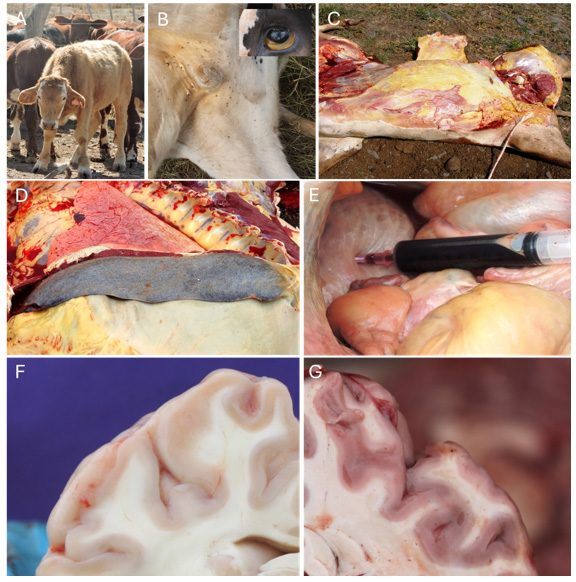
Anemia diseases (Figure 5), primarily anaplasmosis and babesiosis, accounted for 11.7% (n = 50) of recorded deaths. Most babesiosis episodes (16%, n = 8) occurred within 15-20 days after arrival, consistent with the reported incubation period of Babesia spp. (7-20 days). This suggests that the infection was acquired on source farms with tick infestations (Silva et al. 2021). In contrast, A. marginale accounted for most anemia cases (84%, n = 42), with an onset between 30 and 60 days after entering the feedlot. This interval is consistent with the prepatent/incubation period of anaplasmosis (detectable by microscopy ~20-40 days post-infection) and is compatible with transmission among animals during management practices at entry (e.g., reuse of needles and handling equipment) (Guglielmone 1995, Rodríguez et al. 2021). Since most cattle entered the feedlot from auctions, these findings highlight the importance of rigorous epidemiological monitoring and enhanced biosecurity measures during handling to minimize iatrogenic transmission. Anaplasmosis and babesiosis diagnoses were confirmed by peripheral blood smears, a routine diagnostic method (Mazzucco Panizza et al. 2024).
Digestive diseases, particularly acute chemical rumenitis and bloat, accounted for 10.7% of deaths (n = 44), highlighting the challenges of transitioning to high-energy diets. Acute or subacute rumenitis represented approximately 25% (n = 12) of cases, and necropsy findings included erosions, hyperemia, ulcers, and rumen mucosal parakeratosis. These findings were accompanied by inflammatory infiltration and epithelial damage, which were evident under histopathological examination (Streitenberger et al. 2025). The diagnosis of bloat (n= 34) was based on clinical observations of abdominal distension and the presence of a characteristic "ping" line, which was confirmed by postmortem examination. International bibliography agrees that abruptly introducing high concentrations alters the rumen microbiota and reduces pH, leading to acidosis (Nagaraja and Lechtenberg 2007, Steele et al. 2011). An adaptation period of at least 3-4 weeks is required to restore microbial and functional balance in the rumen (Hernández et al. 2014, Mao and Wang 2025). Implementing gradual adaptation protocols that progressively increase concentrate inclusion, together with using additives such as buffers, probiotics, or grain processing, has proven effective in minimizing both acidosis and bloat (Hernández et al. 2014). These results support applying strict nutritional adaptation protocols over several weeks, along with additional strategies, to mitigate the risk of digestive disorders associated with high-energy diets.
Traumatic lesions, mainly fractures from blows, accounted for 8.9% of the cases (n = 38), suggesting that improving facilities and cattle handling could reduce accidents during transport and management. Seventy-five percent of the traumatic cases were observed in the MEJ category (young intact males). In this group, conditions such as the buller-steer syndrome may predispose animals to trauma. Under normal circumstances, prepubertal steers mount each other but usually disengage from the situation. However, some individuals, known as “bullers,” remain immobile and are repeatedly mounted by other steers (“riders”) (Blackshaw et al. 1997). This behavior is more frequent in young animals, although it may persist at older ages, and can cause severe trauma and even death. In studies of commercial feedlots in Canada, it was estimated that 2.7% of steers exhibited this condition, with a bulling-related mortality of approximately 1% (Taylor et al. 1997).
Localized inflammatory conditions, which mainly included cases of pericarditis and peritonitis, collectively accounted for 8.9% (n = 38) of the diagnoses. This finding is consistent with reports from necropsy studies in feedlot cattle, where, although respiratory and digestive diseases constitute the main causes of loss, localized serositis consistently appears as a cause of death (Estima-Silva et al. 2020). In feedlot cattle, peritonitis usually originates from traumatic reticuloperitonitis, perforation of abomasal ulcers, or rupture of liver abscesses secondary to chronic ruminal acidosis (Fecteau 2005, Amachawadi and Nagaraja 2016, Lamego et al. 2025). Pericarditis in this production system is classically associated with the extension of reticuloperitonitis, although it can also result from systemic bacterial infections, such as Histophilus somni, capable of causing polyserositis (O’Toole et al. 2016). The magnitude observed in our study underscores the importance of including these entities in systematic necropsy programs and of adopting preventive measures, such as providing ruminal magnets in cases of traumatic reticulopericarditis (Macedo et al. 2021) or controlling subclinical acidosis in cases of liver abscesses that may lead to peritonitis (Amachawadi and Nagaraja 2016), which could reduce the incidence of predisposing lesions.
Nervous system disorders accounted for 8.9% of recorded mortalities (n = 38), with polioencephalomalacia (PEM) being the predominant disorder. PEM was histopathologically confirmed in over 76% of cases (n = 26). This finding is consistent with reports from feedlots and confinement systems where PEM is associated with disturbances in thiamine metabolism and diets high in concentrates (Fakhruddin et al. 2001, de Sant'Ana et al. 2009). The remaining cases corresponded to multifocal suppurative encephalitis of likely bacterial origin linked to sepsis or secondary infectious processes (Konradt et al. 2017). Only one animal presented lesions compatible with non-suppurative encephalitis, which is typically associated with viral or protozoal agents (Sánchez et al. 2013). While the proportion of deaths attributable to neurological disorders is lower than that attributable to other causes in feedlot systems, the diversity of etiologies identified underscores the importance of precise diagnosis.
Genitourinary disorders accounted for 4.9% of recorded deaths (n = 21), predominantly urolithiasis in castrated steers. This finding aligns with previous reports that describe obstructive urolithiasis as a rare yet significant cause of losses in feedlot systems, especially in castrated males. This is due to their narrower urethral lumen and hormonal changes that affect urinary tract development (Makhdoomi and Gazi 2013). Inappropriate calcium-to-phosphorus ratios in the diet, excess phosphorus and magnesium, and grain-rich diets with low effective fiber promote crystal precipitation and stone formation (Videla and van Amstel 2016, Yohannes and Tesfay 2024). Additionally, insufficient water intake due to restricted access, poor quality, or extreme temperatures increases the risk of obstruction. These results underscore the importance of monitoring the mineral balance of rations, implementing preventive strategies (e.g., urinary acidification), and ensuring continuous access to clean water to reduce the incidence of this condition.
During the summer, 4.9% of the recorded deaths (n = 21) were attributed to heat stress, highlighting the critical importance of managing the summer environment in intensive systems. Although most clinical episodes may be associated with other factors, heat emerges as an insidious trigger in a considerable number of cases, particularly when animals are housed at high density in pens without adequate shade.
In 6.5% of the cases (n = 28), necropsies did not allow a definitive diagnosis, either due to the absence of conclusive findings or because advanced autolysis prevented proper interpretation of the lesions. Such limitations are common in retrospective mortality studies under field conditions and highlight the importance of performing necropsies on time to maximize diagnostic accuracy and to obtain suitable samples for complementary analyses.
These results can be compared with previous studies in Argentina. Costa et al. (2003), in a feedlot in La Plata, reported an annual mortality rate of 0.69%, with digestive disorders predominating during the finishing phase, and respiratory and toxic causes being more frequent during the adaptation period. Similarly, Laguzzi et al. (2015), in a feedlot in Santa Fe, observed that 57.7% of deaths were attributed to respiratory processes, 29.6% to digestive causes (23.3% metabolic and 6.3% infectious), and the remainder to accidents, heat stress, or other causes. The differences observed among studies reflect the influence of regional factors, management practices, cattle origin, and environmental conditions-particularly in Northwestern Argentina-which may affect the frequency and distribution of mortality causes.
Overall, these findings demonstrate that mortality in feedlot systems is determined by multiple interrelated factors. By characterizing mortality causes and treatment patterns under commercial conditions, this study contributes relevant information for improving health management in feedlot systems in northwestern Argentina. The results support the implementation of locally adapted preventive strategies aimed at reducing stress, optimizing nutritional adaptation, and preventing respiratory and hemolytic diseases, thereby minimizing losses and enhancing system profitability.
Acknowledgments. We would like to express our gratitude to INTA and CONICET, institutions where two of the authors (Juan F. Micheloud and Marcelo Signorini) are affiliated, and to La Galesa S.A. for allowing us to carry out this study. We also thank Aldana Emeli Nieva Rojas for assistance with histopathological techniques. This work was supported by La Galesa SA, INTA and CONICET.
CRediT authorship contribution statement. MJF: Conceptualization; Funding acquisition; Methodology; Data analysis; Writing – original draft; Writing – review & editing; Supervision. GPR: Investigation; Data curation; Field necropsies; Sample collection. PF: Investigation; Field necropsies; Sample collection. BU: Data curation; Data recording; Database management. SJ: Data curation; Data recording; Database management. IJI: Data curation; Data recording; Database management. SM: Formal analysis; Statistical analysis; Writing – review & editing.
Declaration of competing interest. The authors declare that they have no conflict of interest.
Data availability. Data will be made available on request.